Austin just crossed a milestone that’s been a long time coming. In 2026, the city officially passed one million residents for the first time in its 187-year history — and the surrounding metro, which includes Round Rock and Georgetown, remains one of the fastest-growing large regions in the entire country. That growth doesn’t happen quietly. Behind every one of those new residents is a moving truck, a stack of boxes, and a homeowner or renter trying to figure out how to get from one place to the next without losing their minds in the process.
If you’re planning a residential move in the Austin metro this year, this guide covers what’s actually changed about the local moving market, what separates a mover worth hiring from one worth avoiding, and where to find honest, transparent service in a city that’s grown almost too fast for its own good.

The Market
Austin’s growth is reshaping the local moving market
A few numbers explain why moving companies in Central Texas are busier than ever. The Austin-Round Rock-Georgetown metro area added roughly 58,000 residents in a single recent year, making it one of the fastest-growing large metro areas in the country. At the same time, the pace of growth inside Austin’s city limits has actually slowed compared to the explosive years between 2010 and 2022, meaning more of that growth is now landing in the surrounding suburbs — Round Rock, Cedar Park, Pflugerville, Leander, and Georgetown chief among them.
That shift matters if you’re planning a move. It means the suburbs ringing Austin are absorbing a larger share of new households, home construction, and moving demand than they were a few years ago. Homeowners relocating within the region are increasingly moving between these suburbs, not just into or out of downtown Austin.
There’s also some good news for movers on a budget. Rents in Austin have been declining and home prices have leveled off from their pandemic-era highs, which has helped keep more longtime residents in place while still drawing new ones in. Slightly softer housing costs paired with steady job growth mean the moving season isn’t slowing down — it’s just spreading out more evenly across the metro.
Local Knowledge
What makes moving in Austin different from anywhere else
Austin isn’t a grid city, and it isn’t flat. A mover who’s spent years navigating the region knows things a generic national chain simply won’t:
- Hill Country terrain in West Austin, Westlake, and parts of Cedar Park and Lakeway means steep driveways, narrow roads, and homes built on multiple levels.
- I-35 and MoPac congestion can turn a 20-minute cross-town move into a two-hour ordeal if a crew doesn’t plan around rush hour.
- Dense apartment corridors — West Campus, South Lamar, the Domain, downtown high-rises — often require freight elevator reservations, loading dock permits, and long-carry planning that a first-timer wouldn’t think to ask about.
- Peak season crunch runs May through September, intensified by University of Texas lease turnover every August, which puts a real strain on availability if you wait too long to book.
- Summer heat regularly hits triple digits, which affects everything from crew scheduling to how furniture and electronics need to be handled in transit.

None of this is exotic information to a moving company that actually lives and works in the Austin metro. It’s daily reality.
The Checklist
What to look for in a residential mover
With dozens of moving companies competing for business across the metro, the difference between a smooth move and a stressful one usually comes down to a handful of factors:
Licensing and insurance
Texas requires movers to register with the Texas Department of Motor Vehicles (TxDMV) for in-state moves, and that registration number should be easy to find on the company’s website. If it isn’t there, that’s worth asking about directly.
Transparent, upfront pricing
Reputable companies quote clearly — hourly for local moves, by scope or volume for larger and commercial jobs — and explain what’s included before the truck shows up. Watch for unusually low phone-only quotes that tend to balloon once the crew arrives.
A real quote process
A mover who wants to understand your home’s layout, stairs, and specialty items before moving day is a mover who’s trying to get the estimate right the first time.
Full-time, trained crews
Companies that employ their own long-term crews — rather than day-labor subcontractors — tend to produce more consistent results, since the same team is accountable from pickup to delivery.
Local reputation you can verify
Recent Google reviews matter more than a polished website. Read a few of the critical ones, not just the five-star highlights, and look for patterns rather than one-off complaints.
Watch out for
Phone-only quotes that come in dramatically below everyone else. A lowball number over the phone is the classic setup for a moving day that ends with a bill far higher than you agreed to.
Coverage
Austin metro service areas
Because so much of the region’s growth is now happening outside Austin’s city limits, it’s worth knowing which suburbs a mover actually covers before you book. A residential move today is just as likely to run between Round Rock and Georgetown as it is within Austin proper. The core Austin metro service area typically includes:
If a company’s service area doesn’t stretch across most of this list, it’s worth confirming coverage before you get too far into planning — especially for moves that cross from one suburb into another.
Local Spotlight
Playhouse Moving
One Austin-based company doing residential moving the way it should be done is Playhouse Moving, a locally owned and operated moving company serving the full Austin metro — including Round Rock, Cedar Park, Pflugerville, Georgetown, Leander, Kyle, Buda, Lakeway, and Manor.

Playhouse Moving has built its reputation on the fundamentals that actually matter to homeowners: transparent, hourly pricing with no hidden fees, a fully licensed and insured crew, and a track record that now includes more than 1,000 completed moves and a 4.9-star Google rating. The company handles everything from apartment moves and full-service home relocations to commercial jobs, and offers after-hours and weekend scheduling for households working around tight timelines.
What stands out most in Playhouse Moving’s customer reviews isn’t just speed — it’s care. Customers consistently mention crew members by name, describe furniture and specialty items handled without damage, and point to fast, honest communication from the first quote through move-out day. For a growing metro where trust and follow-through separate the good movers from the forgettable ones, that kind of consistency is worth something.
Homeowners planning a residential move anywhere in the Austin metro can request a free, no-obligation quote directly at playhousemoving.com.
Get a free quote →Pricing
What residential moving actually costs in Austin
Pricing varies by home size, distance, and time of year, but current market data gives a reasonable range to plan around. Local hourly rates for a two-person crew typically run in the $120–$160 range, with most companies applying a two-hour minimum. Based on recent industry data, local move costs for a typical Austin household commonly fall between roughly $450 and $950 depending on home size, while larger or longer-distance moves can run well beyond that.
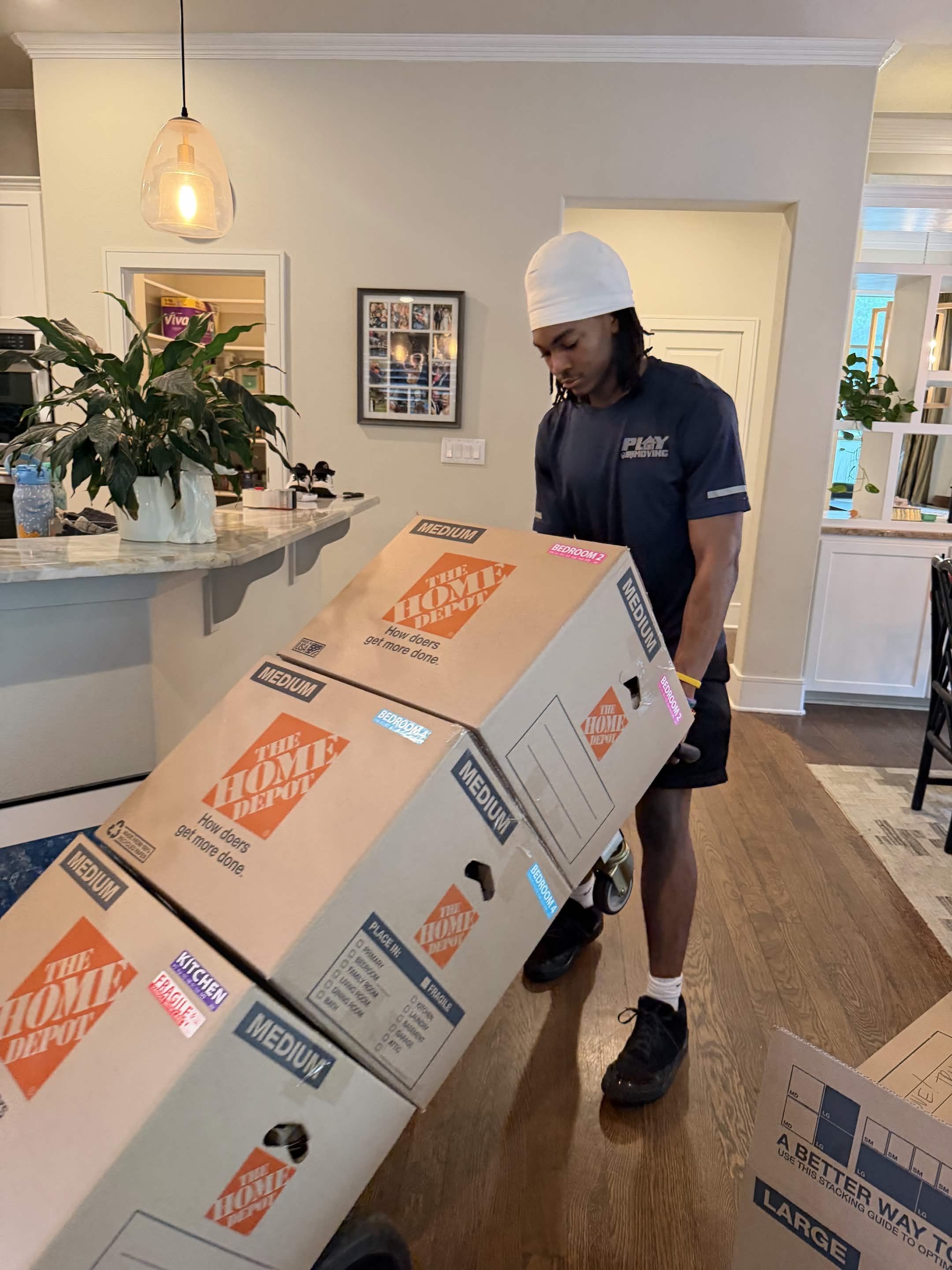
A few pricing factors are consistent across the market:
- Home size and volume is still the single biggest driver of total cost.
- Peak season (May–September) carries higher demand and less flexible scheduling.
- Weekday moves are typically easier to book and can come with more competitive pricing than weekend slots.
- Not-to-exceed estimates are a Texas-specific protection worth asking about — they cap what you’ll pay even if the job runs longer than expected.
Ask about it
A not-to-exceed estimate caps your total even if the crew hits unexpected delays. In a market with triple-digit summer heat and I-35 traffic, that cap is worth requesting in writing.
Tipping isn’t required but is standard practice in the industry, generally in the $20–$50 per mover range for a local move.
Moving Day
Moving day checklist for Austin homeowners
- ✓Book your mover at least 2–3 weeks out during peak season (May–September); earlier if your move falls in August around UT move-in.
- ✓Confirm your mover’s TxDMV registration number before booking.
- ✓Get your estimate in writing, including whether it’s binding or not-to-exceed.
- ✓Reserve freight elevators or loading docks in advance if you’re in an apartment or high-rise.
- ✓Clear driveways, hallways, and parking spots ahead of the crew’s arrival.
- ✓Set up utility transfers (Austin Energy, water, internet) ahead of move-in day.
- ✓File your USPS change of address and update your Texas DMV registration.
- ✓Flag any specialty items — pianos, gun safes, large art, wine collections — when you request your quote, not on moving day.
FAQ
Frequently asked questions
Is it cheaper to rent a truck or hire movers in Austin?
A DIY truck rental looks cheaper on paper, but once you factor in rental costs, fuel, insurance, equipment, and your own time and physical effort, professional movers are often comparable in total cost for anything larger than a studio apartment — and significantly less stressful.
When is the cheapest time to move in Austin?
Winter months, particularly January and February, tend to be the slowest and most affordable time to book. Late August and early September should generally be avoided, since UT student turnover drives demand and pricing up sharply.
Do Austin movers charge extra for stairs or apartment moves?
It depends on the company. Many include standard stair carries in the hourly rate but charge extra for elevator holds, long carries from parking to the front door, or moves above a certain floor. Ask directly during the quote process.
What should I look for in a licensed Austin mover?
Confirm the company is registered with the Texas Department of Motor Vehicles for in-state moves, or holds a USDOT number for interstate moves. Both should be easy to find on the company’s website or verified through TxDMV’s public records.
The Bottom Line
The bottom line
Austin’s growth isn’t slowing down — it’s just spreading further across the metro, which means more households are moving between suburbs like Round Rock, Cedar Park, and Georgetown than ever before. Choosing a mover who actually knows the region, prices honestly, and shows up with a trained, consistent crew makes the difference between a stressful day and a smooth one.
For homeowners anywhere in the Austin metro area, Playhouse Moving is a locally owned option built around exactly those priorities — transparent pricing, licensed and insured service, and a crew that treats every move like it matters. Get a free quote at playhousemoving.com.
This article is part of Moving Company Hustle’s ongoing coverage of the Central Texas moving industry. For more local moving guides and market insights, visit movingcompanyhustle.com.